

Casino Game Reskins vs. Custom Development: Cost, Timeline, and When Each Makes Sense
- Share:
-

-

-

Every operator building a game catalog faces the same question: build from scratch or reskin an existing title?
The answer depends on your budget, your timeline, and what you are trying to achieve. Both approaches have a place in a well-run operation. The mistake is treating them as interchangeable when they serve fundamentally different purposes.
This guide breaks down the real differences between casino game reskins and custom development, with honest numbers and practical advice on when each approach makes sense.
What Is a Casino Game Reskin?
A reskin takes an existing, proven game and gives it a completely new visual identity. New symbols, new characters, new backgrounds, new sound effects, new animations. The player sees a different game. Under the hood, the math model, game engine, RNG integration, backend logic, and session management remain unchanged.
Think of it this way: the engine and chassis stay the same. The body, paint, and interior are completely new.
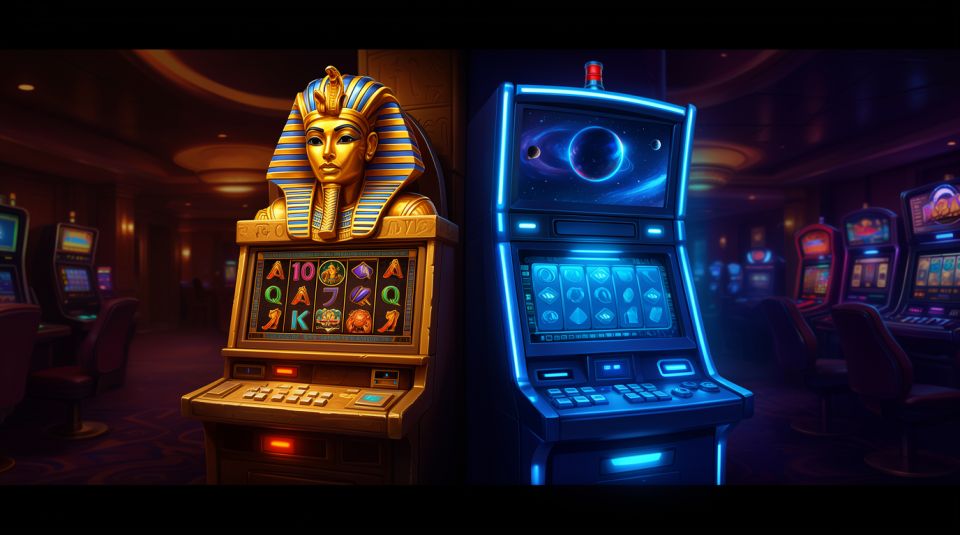
A well-executed reskin is indistinguishable from an original title to the player. They do not know (and should not be able to tell) that the math model powering their favorite Egyptian-themed slot is the same one behind a space-themed game on the same platform. Both play differently, look different, and feel different. The payout mechanics simply happen to be identical.
This is not a shortcut. It is an engineering practice used across the industry, from the largest providers down to independent studios. When a math model has been tested, certified, and proven to perform well with players, there is no reason to rebuild it from zero for every visual theme.
What Is Custom (Full Build) Development?
A custom build means everything is created from scratch. New math model with unique payout tables and volatility curves. New bonus mechanics. New animations and character designs. New sound design. New frontend and backend code.
Nothing is reused from an existing title.
This is the approach for games that need to do something no existing title does. A novel bonus mechanic, a specific volatility profile for a target market, a branded game with licensed intellectual property, or a flagship title that needs to stand apart from everything else in your catalog.
Custom builds cost more and take longer. That is the tradeoff for having something entirely unique.
Cost Comparison
The price gap between the two approaches is substantial. Here is what operators should expect in the current market.
Custom slot game (full build): EUR 25,000 to EUR 50,000 or more, depending on complexity. Games with multiple bonus rounds, heavy character animation, and sophisticated math models sit at the upper end. Simpler titles with fewer features come in lower, but rarely below EUR 25,000 for anything production-grade.
Reskin of a table or card game: EUR 4,000 to EUR 6,000. The savings are dramatic because the backend code, math engine, RNG integration, and session management are already built, tested, and certified. The work is purely visual and auditory.
Reskin of a slot game: Varies based on the complexity of the visual theme. More elaborate symbol sets, character animations, and background art push the price up, but the total is still a fraction of a full build because the math model and core engine are reused.
Where do the savings come from? Consider what goes into a full build that a reskin skips entirely:
- Math model design, simulation, and certification (often the most time-consuming phase)
- Backend architecture, session management, and state handling
- RNG integration and compliance testing
- Payout table balancing and volatility tuning
- QA testing of game logic (as opposed to visual QA, which both approaches require)
When you reskin, all of that work is already done. You are paying only for the creative layer on top of a proven foundation.
Timeline Comparison
Time-to-market is often as important as cost, sometimes more so.
Custom build: 2 to 6 months from concept to production. Math model design and certification alone can take 4 to 8 weeks. Add character design, animation, sound production, frontend development, integration testing, and compliance review. Complex titles with multiple bonus rounds and elaborate animations sit at the longer end of that range.
Reskin: 2 to 4 weeks. The scope is limited to visual design, asset creation, and integration of new art into the existing engine. No math modeling. No backend development. No RNG certification (the underlying model is already certified).
That difference matters in practice. An operator planning a holiday-themed promotion can commission a reskin and have it live in time. A custom build for the same deadline would need to start months earlier.
When to Choose a Reskin
Reskins are the right call in several common scenarios.
You want to expand your catalog quickly. A platform with 20 games looks thin to players. One with 80 looks established. Reskins let you build catalog depth without the cost or timeline of building each title from scratch. Players want variety, and variety does not require 80 unique math models.
The math model already performs well. If an existing game has strong player engagement metrics, proven retention numbers, and a balanced volatility profile, there is no reason to gamble on a new math model when you can wrap that proven engine in a fresh theme. You already know the math works. Now you just need a new visual story around it.
Your budget is limited. An operator with EUR 30,000 to spend on games can either build one custom slot or acquire several reskins. For most operators at this stage, catalog breadth delivers more value than a single standout title.
You need games for a specific theme or event. Holiday promotions, brand partnerships, market-specific themes (Lunar New Year for Asian markets, Carnival for Latin America). These are time-sensitive opportunities where a 2-week turnaround makes the difference between capitalizing on a moment and missing it entirely.
You are testing a new market. Entering an unfamiliar jurisdiction or demographic? Reskins let you test with minimal financial exposure. If the market responds, you invest in custom titles. If it does not, your downside is a fraction of what a custom build would have cost.
When to Choose Custom Development
Custom builds are warranted when the situation demands something that does not exist yet.
You need unique mechanics. If your game concept requires a bonus structure, win mechanic, or feature set that no existing title offers, you cannot reskin your way there. The math model has to be built from the ground up.
Differentiation is critical for your brand. Flagship titles that define your platform need to be original. If your marketing strategy centers on having games no one else has, custom development is the only path. Reskins, by definition, share their DNA with other titles.
You have a specific math model requirement. A target RTP, a particular volatility curve, a payout distribution designed for a specific player segment or regulatory environment. When the math itself is the product requirement, you need a custom build.
You are building a franchise title. Games you plan to market heavily, build a player community around, or use as the centerpiece of your platform. These justify the higher investment because they carry disproportionate brand value.
The Hybrid Approach: Why Most Successful Operators Do Both
The most effective game acquisition strategy is not one or the other. It is both.
Custom builds for your flagship titles. The two or three games that define your brand, attract players through marketing, and differentiate you from competitors. These justify the investment in unique math models and original design.
Reskins for catalog depth. The 30, 50, or 100 additional titles that give players variety and keep them on your platform longer. These do not need unique math models. They need polished visuals, engaging themes, and proven gameplay mechanics.
This is the approach used by operators at every scale. Even the largest providers in the industry maintain libraries of math models that power multiple visual themes. It is standard practice, not a compromise.
What Separates a Good Reskin from a Lazy One
Not all reskins are created equal.
A lazy reskin swaps a few symbol images, changes the background color, and ships it. Players notice. Reviews suffer. The game feels like a copy because it is one.
A proper reskin replaces every visual and auditory element the player encounters:
- Completely new symbol set with original artwork
- New background art and environment design
- New character animations (if applicable)
- New sound effects and background music
- Updated UI elements to match the new theme
- New win celebrations and bonus round visuals
When done properly, a reskin feels like a new game because, from the player's perspective, it is a new game. The math behind the curtain is the same. Everything the player sees and hears is different.
Quality matters here more than anywhere. A cheap reskin damages your brand. A well-crafted one strengthens your catalog.
How CasinoWebScripts Handles Both
The CasinoWebScripts game catalog includes 254 HTML5 casino games, both original builds and reskins. Every title uses GLI-19 certified RNG, with transparent pricing across all three licensing tiers (rent, buy one-domain, and full source code).
Reskinned titles use proven math models from their original counterparts. Operators can see which titles share a game engine and choose based on the visual theme that fits their audience. Original builds carry unique math models with independently tested payout tables.
Both types ship with the same deliverables: full HTML5 mobile compatibility, backend integration, and 0% revenue share on buy and source code licenses.
Making the Decision
Start with what you are trying to accomplish.
If you need catalog depth, speed, or cost efficiency, reskins are the straightforward answer. If you need something no existing game offers, custom development is the only option. If you are building a platform for the long term, plan for both.
The operators who grow fastest are not the ones who insist on building everything from scratch. They are the ones who allocate their budget strategically: custom where it matters, reskins where it makes sense.
That is not a compromise. It is how the industry works.
Ready to see what is available? Compare pricing across all tiers or browse the full catalog to find the right mix for your platform.
- Share:
-
-
-