
Sweepstakes Casino Games with No Revenue Share: Buy Once, Keep 100% of Revenue
- Share:
-

-

-

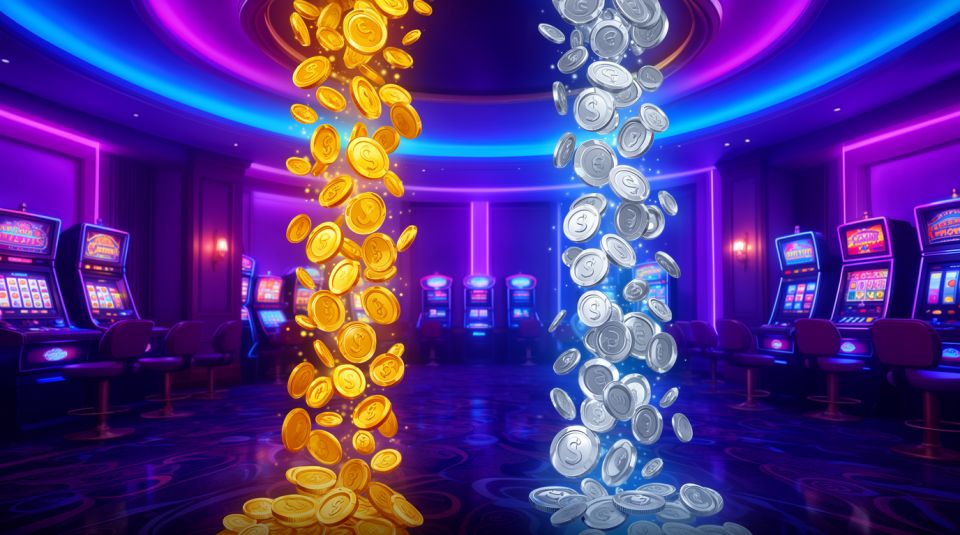
The sweepstakes casino market in the United States has grown from a handful of operators to well over 140 active brands. The model works because it sidesteps the traditional gambling license requirement in most states, using a dual-currency structure where players purchase gold coins for entertainment and receive sweeps coins that can be redeemed for real prizes.
For operators, the appeal is obvious: a legal path to offering casino-style games across most of the country without the six-figure licensing fees and multi-year approval timelines that come with regulated real-money gaming.
But as the market matures, many operators are discovering that the economics of their software deals quietly erode the very margins that made sweepstakes attractive in the first place.
The Revenue Share Problem Most Operators Ignore
Most sweepstakes platform providers use one of two pricing structures: a percentage of Gross Gaming Revenue (GGR), or a per-spin fee on every bet processed through their games.
On paper, both sound reasonable. An 8-12% GGR share looks manageable when your platform is generating modest revenue during the first few months. A fraction-of-a-cent per-spin fee sounds trivial in isolation.
At scale, the math changes completely.
A sweepstakes platform processing $500,000 in monthly GGR at a 10% revenue share sends $50,000 per month to the software provider. That is $600,000 per year, paid indefinitely, for games the operator never owns. Per-spin fees compound in the same way. A busy platform with millions of spins per day can generate five-figure monthly costs from transaction fees alone.
The operator bears all the risk: player acquisition costs, payment processing, compliance, customer support, server infrastructure. The software provider collects a guaranteed percentage with no downside exposure. That asymmetry becomes harder to justify as the operation scales.
There is another layer to this that most operators overlook. The games you are licensing through a revenue share agreement are not exclusive to you. The same titles, with the same themes and the same mechanics, are available to every other operator who signs up with that provider. You are paying an ongoing percentage for games that your direct competitor can offer to the same players, on the same terms, with the same look and feel. You are not building a differentiated product. You are renting a shared one.
What Sweepstakes-Specific Game Wiring Actually Means
Before discussing ownership models, it helps to understand what makes a sweepstakes game technically different from a standard real-money casino game.
It is not simply a matter of replacing "dollars" with "coins" in the user interface. Proper sweepstakes game wiring involves several distinct technical layers:
- Dual-currency architecture. Every game must handle two separate currencies simultaneously: gold coins (the purchased virtual currency used for entertainment) and sweeps coins (the promotional currency redeemable for prizes). These are not interchangeable. They require separate balance tracking, separate transaction logs, and separate display logic.
- Separate prize pools. Gold coin play and sweeps coin play must maintain independent prize pools. Winnings from one currency type cannot cross-contaminate the other. The backend must enforce this separation at the database level, not just in the frontend display.
- Bet and win conversion layers. The conversion between a player's coin balance and the game's internal math engine requires a dedicated translation layer. The game's RNG and math model operate on abstract units. The conversion layer maps those units to the correct currency type, applying the appropriate multipliers for each mode.
- Frontend currency switching. Players need to toggle between gold coin mode and sweeps coin mode. The game interface must reflect the active currency, update balances in real time, and prevent any ambiguity about which currency is in play.
Many operators learn this distinction the hard way. They purchase or license standard real-money games, then attempt to retrofit a sweepstakes layer on top. The result is usually a fragile system that breaks under audit scrutiny or creates accounting discrepancies that are difficult to trace.
Games built with sweepstakes wiring from the ground up handle these requirements natively. The dual-currency logic is embedded in the game's core architecture, not bolted on as an afterthought.
Why Owning Your Games Changes the Business
The alternative to revenue share is straightforward: buy the games outright.
Ownership means a one-time cost with no recurring percentage. The operator pays once and keeps 100% of the revenue those games generate, forever. No monthly invoices tied to performance. No per-spin fees that scale with success. No renegotiation when the provider notices your platform is doing well.
But the financial benefit is only part of it. Ownership gives operators control over their product in ways that licensed games never can:
- Branding and customization. Owned games can be reskinned, renamed, and visually modified to match the platform's brand identity. Licensed games are typically locked. What the provider gives you is what your players see.
- No API dependency. Licensed games run on the provider's servers, called via API. If their infrastructure goes down, your games go dark. Owned games run on your infrastructure, under your control. Your uptime is your responsibility, not someone else's problem to deprioritize.
- Regulatory flexibility. As sweepstakes regulations evolve state by state, operators may need to modify game behavior for specific jurisdictions. With owned source code, those modifications are possible. With licensed games, you submit a feature request and wait.
RTP Configuration: A Quiet Competitive Advantage
Return to Player (RTP) is one of the most important operational levers in sweepstakes gaming, yet most operators have no control over it.
Licensed games ship with a fixed RTP, typically around 96%. The operator cannot adjust it. This creates a problem because sweepstakes operators often need multiple RTP configurations for different contexts:
- Promotional RTP (~96%). Higher return rates for player acquisition campaigns, new player bonuses, or featured game placements.
- Standard RTP (~90%). The default configuration for everyday play, balancing player satisfaction with sustainable margins.
- Conservative RTP (~85% or ~80%). Lower return rates for high-volume games or specific market segments where tighter margins are acceptable to players.
When you own the source code, RTP becomes a configurable parameter rather than a fixed constraint. You can run different RTP profiles across different games, different player segments, or different promotional periods. That level of control is not a luxury. For mature sweepstakes operations, it is a core part of revenue optimization.
GLI-19 Certification: Why It Matters Even Without a Gambling License
Sweepstakes casinos do not require a gambling license in most jurisdictions. That leads some operators to assume that game certification is unnecessary.
That assumption is increasingly risky.
GLI-19 is the standard for evaluating interactive gaming systems, covering RNG fairness, math model accuracy, and game integrity. Having games built on a GLI-19 certified RNG provides several concrete advantages for sweepstakes operators:
- Legal defensibility. If a state attorney general or regulatory body investigates your platform, certified games demonstrate that your RNG is independently verified and your math models produce the outcomes they claim to produce. That documentation matters when the alternative is shutting down operations while you prove your games are fair.
- Payment processor confidence. Banks and payment processors are increasingly cautious about sweepstakes platforms. GLI-19 certification signals that the games are legitimate and the operator takes compliance seriously. It does not guarantee approval, but it removes one common objection.
- Player trust. Sophisticated players, especially those who spend significant amounts, look for signals that a platform is trustworthy. Certified games provide that signal without requiring the operator to make unverifiable claims about fairness.
Certification is not a regulatory requirement for sweepstakes. It is an operational advantage that reduces risk and opens doors that would otherwise stay closed.
HTML5 and Cross-Platform Compatibility
Sweepstakes players access games primarily through web browsers on mobile devices. Any game that requires a dedicated app, a Flash plugin, or a desktop-only client is effectively invisible to the majority of the market.
HTML5 games run natively in any modern browser across phones, tablets, and desktops without requiring players to download or install anything. For sweepstakes operators, this is not a feature preference. It is a prerequisite. Players expect to tap a link and start playing immediately.
The technical implication for game purchases is that the games must be built in HTML5 from the start, not converted from older Flash or Unity-based builds. Converted games often carry performance issues on mobile devices: slow load times, unresponsive touch controls, and layouts that do not adapt properly to different screen sizes.
Evaluating a No-Revenue-Share Game Provider
Not all outright purchase options are equal. Before committing, operators should evaluate several factors:
- Sweepstakes wiring included, not optional. The dual-currency system should be built into the game architecture, not offered as an add-on integration that requires additional development.
- Source code access. Buying a game without source code still leaves you dependent on the provider for modifications. Full source code ownership means your development team can maintain, modify, and extend the games independently.
- Game library depth. A handful of games is not enough to sustain player engagement. Sweepstakes players expect variety: slots, table games, scratch cards, video poker. The provider should offer a catalog large enough to populate a platform without relying on multiple vendors.
- Certification documentation. Ask for the GLI-19 certificate specifically. Claims of "fair gaming" without independent certification are not equivalent.
- RTP configurability. Confirm that RTP can be adjusted per game, and ask how. If the answer involves contacting the provider for every change, you do not truly own the configuration.
CasinoWebScripts offers 254 HTML5 casino games with sweepstakes dual-currency wiring built in. All games use a GLI-19 certified RNG, RTP is configurable across multiple variants, and the purchase model is zero revenue share. Operators buy games outright and keep 100% of the revenue they generate. The full game catalog includes slots, table games, scratch cards, video poker, and arcade games, all available with source code access for operators who want complete control.
The Long-Term Math
The decision between licensing and ownership comes down to a simple calculation that most operators postpone until it is too late.
Take a sweepstakes platform generating $200,000 in monthly GGR. A 10% revenue share costs $20,000 per month, or $240,000 per year. Over three years, that is $720,000 paid for games the operator still does not own. The provider can change terms, raise rates, or discontinue games at any point.
Compare that to a one-time purchase of 50 games with full source code and sweepstakes wiring. The upfront cost is higher, but by month eight or nine of operation, the owned games have paid for themselves. Every month after that is pure margin improvement.
For operators who are serious about building a durable sweepstakes business rather than renting someone else's, the math is not ambiguous.
What Comes Next
The sweepstakes market is still growing, but it is also maturing. Regulatory scrutiny is increasing. Payment processors are getting more selective. Players are becoming more discerning about game quality and platform legitimacy.
Operators who control their own game library, who can adapt RTP configurations, who can prove game fairness through independent certification, and who are not bleeding margin to revenue share agreements are the ones positioned to survive the next phase of this market.
The operators who built on licensed games with revenue share models will face a harder question every quarter: keep paying an ever-larger share of revenue for games they cannot modify, or start over with owned assets.
Better to start with ownership from the beginning.
Related reading: Sweepstakes vs. Real Money Online Casinos: Which One Is Right for You? — or compare providers in our guide to the best sweepstakes casino software.
Related sweepstakes software guides
- Sweepstakes games software — how the Gold Coin / Sweeps Coin model works.
- Sweepstakes casino platform — the currency engine under the hood.
- Casino software for sale — sale vs rental, and what you actually buy.
- Share:
-
-
-