

Slot Volatility Explained: Why It Matters More Than Most Features
- Share:
-

-

-

Slot games have changed a lot over the past decade. What used to be simple three-reel formats have evolved into complex, layered experiences with bonus buys, cascading wins, multipliers, expanding reels, and interactive mini-games.
But if you strip away the visuals and features, one core element shapes how a slot actually feels to play.
Slot volatility.
In 2026, volatility is one of the most important factors behind player behavior. It affects how long sessions last, how players respond emotionally, and how well a game performs inside a casino portfolio.
Features might attract attention, while volatility decides whether players stay.
What Is Slot Volatility?
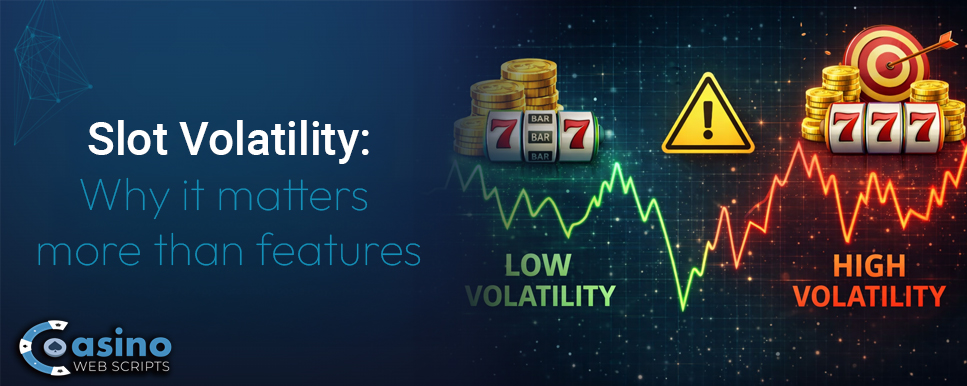
Slot volatility describes how often a game pays out and how large those payouts typically are.
- Low volatility slots give smaller wins more frequently.
- High volatility slots pay less often but can deliver larger wins.
- Medium volatility games sit somewhere in between.
That sounds simple, but volatility does more than determine payout size. It shapes the rhythm of the game.
Two slots can have the same RTP but feel completely different. One might give steady small rewards that keep players comfortable. The other might go quiet for a while and then deliver a big win that feels dramatic and memorable.
Slot RTP vs Volatility: Why the Difference Matters
RTP and volatility are often mentioned together, but they measure different things.
RTP tells you how much a slot theoretically returns over the long run.
Volatility tells you how that return is distributed during play.
For example, a high RTP slot can still be high volatility. It may return a solid percentage over time, but in fewer and larger wins rather than steady small ones.
For players, this difference affects emotion.
For operators, it affects retention patterns, bankroll cycles, and portfolio balance.
If you misunderstand volatility, you misunderstand how the game actually behaves.
Why Volatility Has a Direct Impact on Player Behavior
Volatility changes how players experience a session.
Low volatility slots tend to:
- Extend playing time
- Provide frequent reinforcement
- Feel steady and predictable
High volatility slots tend to:
- Create tension
- Build anticipation
- Deliver intense peak moments
Some players prefer comfort, but others prefer excitement. If a player looking for steady entertainment lands on a high volatility slot, they may leave quickly. If a risk-seeking player finds only low volatility games, they may get bored.
Volatility is not about right or wrong design, but it’s certainly about matching player expectations.
Features Are Often Built Around Volatility
When new slot mechanics are introduced, they often look like creative innovations. But many are designed to support a specific volatility structure.
Buy bonus features, for example, appeal strongly to high volatility players. Instead of waiting for a bonus to trigger, they access the most intense part of the game immediately.
Hold and win mechanics usually operate in a controlled way. They build suspense through locked symbols and step-by-step progression, which often feels less extreme but still engaging.
Megaways systems increase unpredictability by changing reel heights on every spin. That unpredictability increases perceived volatility.
Cluster pays and cascading mechanics often distribute wins in waves, which can feel more dynamic even if overall variance is moderate.
The visible feature may be what gets marketed. The volatility underneath is what shapes performance.
Why Volatility Matters When Building a Casino Portfolio
When you are managing a casino platform, volatility becomes more than a game setting.
If your entire slot library leans heavily toward high volatility, sessions may feel intense but short. Players may experience bigger swings, which can increase churn if not balanced.
If your portfolio is mostly low volatility, sessions may last longer but lack standout moments. The platform may feel safe but not exciting.
Most successful operators aim for a mix.
A balanced lobby typically includes:
- Low volatility slots for longer, relaxed sessions
- Medium volatility games for broad appeal
- High volatility slots for big win potential and promotional highlights
This balance supports different player types and creates a healthier ecosystem overall.
It also improves marketing flexibility. Promoting a high volatility title feels different from promoting a steady entertainment slot. Both have value, but they serve different goals.
Volatility in Real Money and Social Casinos
Slot volatility plays a slightly different role depending on the business model.
In real money casinos, volatility directly affects risk perception and bankroll behavior. Players consciously choose between lower variance and higher variance games.
In social casinos, there is no direct financial risk, but the emotional structure remains. High volatility still creates excitement. Low volatility still extends play sessions.
The difference lies in how volatility connects to monetization. In social environments, engagement cycles and virtual currency purchases are influenced by session rhythm.
Either way, volatility continues to shape behavior.
The Emotional Curve of a Slot Session
One of the most overlooked aspects of slot volatility is how it shapes the emotional curve of a session.
A low volatility slot might create a smooth curve with steady feedback.
A high volatility slot might create a flat period followed by a sharp spike.
Developers often design bonus rounds as volatility peaks. The base game may build tension gradually before releasing it in a concentrated moment.
Understanding this curve helps explain why some slots feel satisfying even if the payout is modest, while others feel frustrating despite having strong RTP.
Data and Volatility in 2026
In 2026, operators can’t ignore volatility. It needs to be tracked and reviewed regularly to keep their iGaming portfolio on the right track. Operators track:
- Average session length by volatility category
- Player migration between volatility levels
- Bonus trigger frequency
- Drop-off points
This data helps refine portfolio composition and recommendation systems.
For example, if new players consistently abandon high volatility games within minutes, the lobby structure may need adjustment.
If medium volatility slots show the strongest retention across segments, that insight shapes future integration decisions.
Why Platform Infrastructure Still Matters
Understanding slot volatility is useful. Being able to manage it effectively is even more important.
If your platform allows you to:
- Categorize games by volatility
- Track performance by variance level
- Adjust positioning dynamically
- Analyze behavior across volatility segments
Then volatility becomes a strategic advantage.
If not, it remains an abstract concept.
In modern iGaming operations, design knowledge and backend capability need to work together.
Looking Ahead: Will Volatility Become More Extreme?
As slot innovation continues, maximum win multipliers have increased dramatically. High volatility designs have become more visible, particularly in promotional campaigns.
But that does not mean lower volatility is disappearing.
If anything, the market is becoming more segmented. Some players chase extreme variance. Others seek longer, calmer sessions.
Developers are responding by creating clearer volatility identities within their titles.
Understanding that landscape helps operators avoid chasing trends blindly.
Conclusion
Slot volatility does not appear in marketing banners as often as flashy mechanics. It is not as visually obvious as a bonus buy button or an expanding reel animation.
But it is the foundation of how a slot feels. It shapes emotion, influences retention, and determines whether players come back.
For anyone working in iGaming, understanding slot volatility means understanding the structure beneath the surface.
FAQ: Slot volatility
What is slot volatility?
Slot volatility describes how often a slot game pays out and how large those payouts tend to be. Low volatility slots pay smaller amounts more frequently, while high volatility slots pay less often but can deliver larger wins.
Is high volatility better than low volatility?
Neither is better. High volatility appeals to players who enjoy chasing bigger wins and don’t mind longer dry periods. Low volatility suits players who prefer steady gameplay with more frequent smaller rewards. It depends on player preference.
How is slot volatility different from RTP?
RTP shows the theoretical return of a slot over the long term. Volatility shows how that return is distributed during gameplay. Two games can have the same RTP but feel completely different because their volatility levels vary.
Why does slot volatility matter for casino operators?
Volatility affects session length, player retention, and overall portfolio balance. A well-structured casino platform typically includes a mix of low, medium, and high volatility games to appeal to different player types.
- Share:
-
-
-