

Sweepstakes Casino Legal States in USA - 2026
- Share:
-

-

-

Sweepstakes Casinos in the U.S.: Which States Have Banned Them, Which Still Allow Them, and Which Could Move Next
If you operate in the sweepstakes space, 2026 already feels very different from 2024. Not long ago, the discussion around sweepstakes casinos focused almost entirely on growth: new states, more players, higher retention, and an expanding ecosystem of operators and suppliers.
That conversation has now shifted. The industry is moving into a phase where legal risk, regulatory attention, and operational discipline matter just as much as marketing or game design. Several major U.S. states moved from vague concerns to direct legislative or enforcement action in 2025, and by early 2026 the map looks far less uniform than it once did.
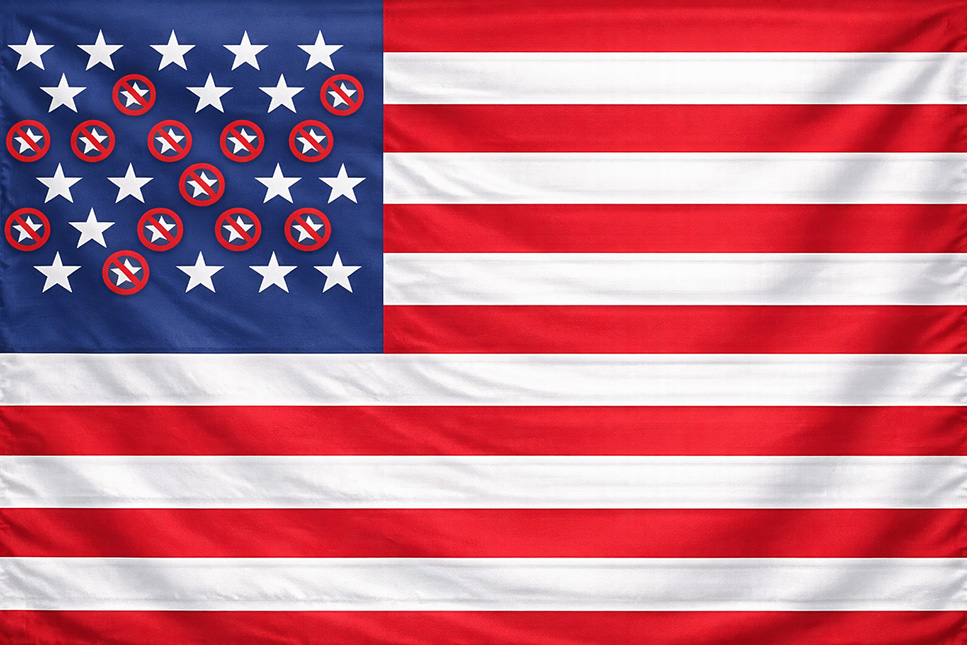
Instead of one large gray area, the United States has effectively become a patchwork of closed jurisdictions, states under regulatory pressure, and states where sweepstakes casinos still operate with relatively limited interference. For operators, the key challenge is no longer simply “Can we launch?” but rather “Where does it still make sense to operate?”
This article approaches the topic from an operator perspective. Rather than simply listing legal statuses, it looks at how operators typically segment the U.S. market today and how sweepstakes platforms are adjusting their launch strategies.
1. Hard No States (Effectively Closed Markets)
Some states are now considered effectively closed to sweepstakes casino models. In these jurisdictions, legislation, regulatory interpretation, or enforcement activity has made the traditional dual-currency sweepstakes structure extremely difficult to operate.
California passed AB 831 in October 2025, directly targeting online sweepstakes casino models. Connecticut approved Public Act 25-112, which prohibits unlicensed sweepstakes promotions that simulate casino gaming or sports wagering. Montana’s SB 555 expanded the definition of internet gambling broadly enough to capture most online casino-style products, regardless of branding.
New Jersey also enacted legislation specifically addressing sweepstakes gaming mechanics, while New York moved aggressively after its Attorney General issued enforcement actions against multiple platforms in 2025.
Beyond those states, several others are widely treated as closed markets due to regulatory interpretation or enforcement history. Washington has long taken a strict stance against online gambling outside explicitly authorized frameworks. Idaho limits the ability to redeem sweepstakes prizes for cash value, which undermines the economic model entirely. Nevada strengthened penalties around illegal gaming, and Delaware and Michigan have issued cease-and-desist actions against operators.
For most operators, these states fall into a simple operational category: geoblocked and excluded from marketing campaigns.
2. High-Risk States (Active Legislative or Enforcement Pressure)
The next category consists of states where sweepstakes casinos may still technically operate today, but where regulatory momentum suggests potential changes in the near future.
Tennessee provides a good example. In late 2025 the state Attorney General announced enforcement actions against dozens of sweepstakes platforms, prompting many operators to disable features or exit the market voluntarily.
Florida, one of the largest U.S. markets, still allows sweepstakes casinos at the time of writing, but legislative proposals such as HB 189 indicate growing scrutiny. Similar discussions have appeared in Virginia, Iowa, Mississippi, and Maine, where lawmakers have introduced bills targeting unlicensed online sweepstakes gaming.
Several other states have also seen enforcement signals from regulators or gaming commissions. Arizona, Illinois, Maryland, Louisiana, and Pennsylvania have all experienced varying levels of pressure through cease-and-desist letters, legislative proposals, or regulatory statements.
From an operator standpoint, these markets are usually classified as “monitor closely.” Many platforms continue operating there but adjust marketing intensity, payment options, or promotional structures to reduce risk.
3. Operational States (Currently Workable Markets)
Despite increased scrutiny, a large portion of the United States still remains operational for sweepstakes casino platforms. States such as Alabama, Alaska, Arkansas, Colorado, Georgia, Hawaii, Kansas, Kentucky, Massachusetts, Minnesota, Missouri, Nebraska, New Hampshire, New Mexico, North Carolina, North Dakota, Ohio, Oklahoma, Oregon, Rhode Island, South Carolina, South Dakota, Texas, Vermont, West Virginia, Wisconsin, Wyoming, and Washington D.C. are generally considered workable markets today.
However, "workable" does not necessarily mean 100% risk-free. Legislative attention can shift quickly, particularly in larger markets where real-money online gaming or sports betting debates are already active, so these states should still be monitored actively.
4. How Operators Typically Manage State Risk
As the legal environment evolves, sweepstakes operators are increasingly adopting a more structured approach to state-by-state risk management.
The first layer is geofencing. Most platforms now use precise geolocation technology to block access from jurisdictions where sweepstakes models are clearly prohibited.
The second layer is payment compliance. Operators often adjust payment providers or redemption mechanisms depending on the regulatory climate of specific states. Some platforms restrict certain withdrawal methods in higher-risk jurisdictions.
The third layer involves promotional design. Regulators increasingly examine how sweepstakes promotions are structured, including alternative methods of entry, prize redemption rules, and the relationship between purchased currency and sweepstakes currency.
Finally, operators typically maintain internal compliance reviews that monitor legislative developments and enforcement activity across the U.S. gaming landscape.
5. Why the Dual-Currency Model Is Receiving More Attention
Many of the recent regulatory debates around sweepstakes casinos focus on the mechanics of the dual-currency system. In this model, players purchase a virtual currency used for entertainment gameplay while receiving promotional sweepstakes currency that can be redeemed for prizes.
While this structure has existed for years across various promotional industries, regulators are increasingly evaluating how it is implemented within casino-style gaming environments. Questions around prize redemption, promotional disclosures, and player incentives are now appearing more frequently in legislative discussions.
This means that future regulation may focus less on the word "sweepstakes" and more on how the underlying mechanics function.
6. What This Means for Sweepstakes Casino Operators
The biggest shift for operators is strategic. The era of launching nationwide and adjusting later is gradually fading. Instead, successful platforms increasingly approach the U.S. market through a segmented strategy that prioritizes compliance, operational flexibility, and risk management.
Operators now tend to launch first in jurisdictions that show minimal regulatory friction, while maintaining contingency plans for markets that could shift quickly due to legislative action.
At the same time, many platforms are refining their internal compliance processes, strengthening legal review procedures, and working closely with payment providers, marketing partners, and game suppliers to ensure their systems remain adaptable.
Final Thoughts
Sweepstakes casinos are still operating across much of the United States, but the environment is clearly evolving. A small group of states has already taken decisive action against the model. Another group is actively debating regulation. The rest of the market remains open, at least for now.
For operators, the key takeaway is simple: success in the U.S. sweepstakes market increasingly depends on strategic state selection, strong compliance frameworks, and the ability to adapt quickly to regulatory change.
The question is no longer whether sweepstakes casinos can operate in the United States. The real question for operators in 2026 is where they can operate sustainably.
- Share:
-
-
-